



03 Feb Opa Mountains
Our “little piece of paradise”
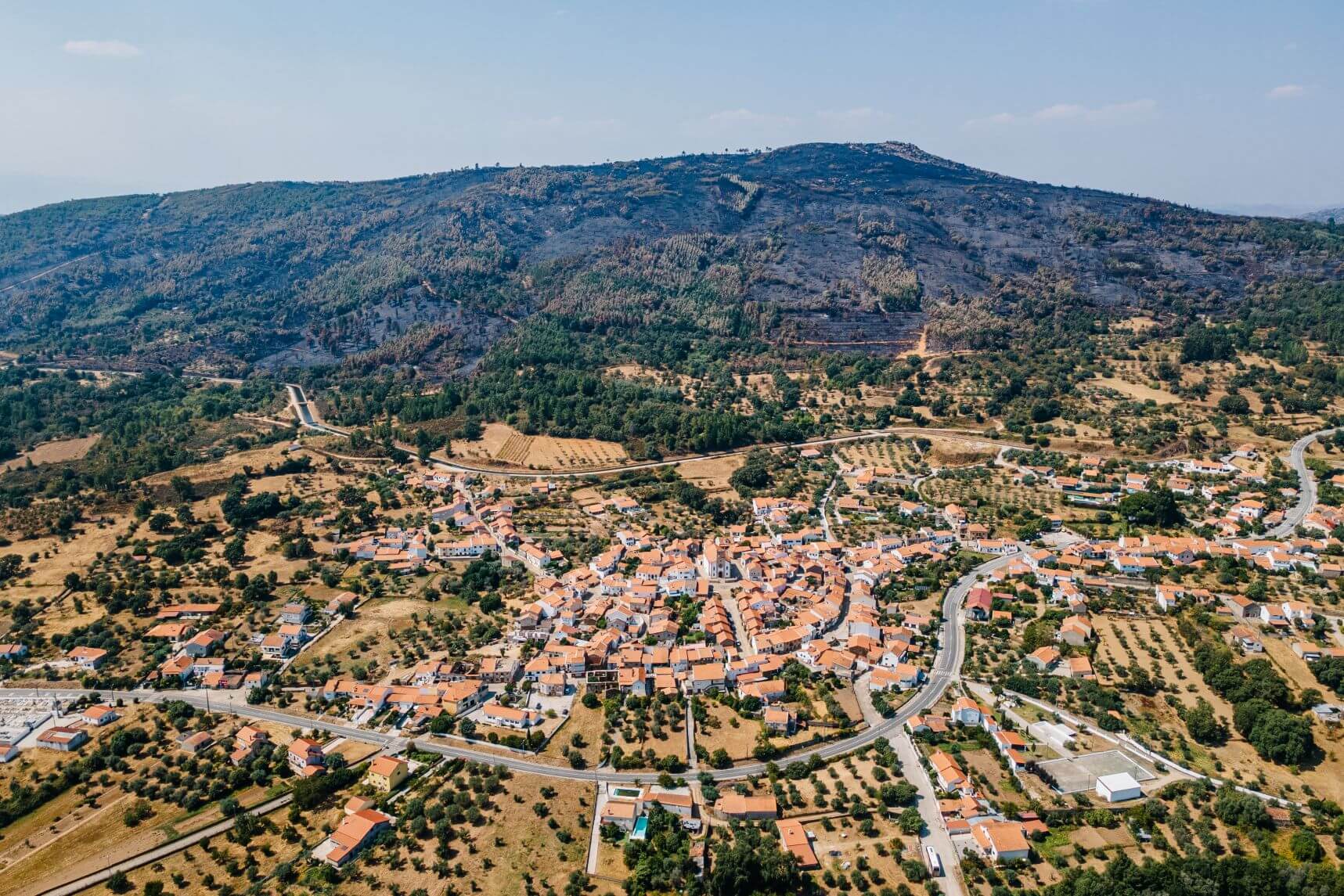
When we started coming to Vale da Senhora da Póvoa more frequently, even before we settled here, it was rare that I (Samuel) didn’t climb to the top of Serra d’Opa, whether by motorbike, mountain bike, or on foot.
Initially, it was nothing more than a physical and technical challenge, with the reward being “only” the 360º view from the geodetic marker, which rests 867m above sea level. From here, on a clear day, we can easily see the cities of Guarda and Castelo Branco, at opposite points, with a panoramic view complemented by the cities of Covilhã and Fundão, and the Historical Villages of Sortelha and Monsanto, in addition to the various neighboring towns and the inevitable Malcata Mountains, with the Mesas Mountains in the background.
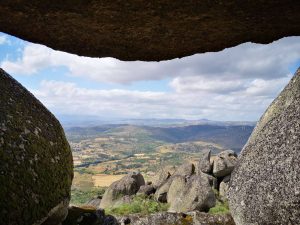
Vista do interior de um barroco para a cidade da Guarda, no horizonte
Among the plant species present in the mountains, the most notable flora includes the Paeonia broteri, the Colchicum montanum, and the ever-important Pyrenean oak (Quercus pyrenaica). Regarding fauna, evidence of the presence of roe deer (Capreolus capreolus) is increasingly significant, and occasionally the red deer (Cervus elaphus) is also sighted. The presence of genet (Genetta genetta) and badger (Meles meles) has also been confirmed by sightings and the presence of latrines typical of the species. Due to the absence of top predators, the density of fox (Vulpes vulpes) and wild boar (Sus scrofa) is considerable. In addition to these, we cannot ignore the frequent sightings of griffon vulture (Gyps fulvus) and red kite (Milvus milvus) among the birds.
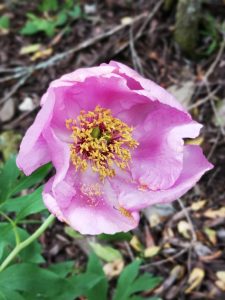
paeonia broterii
Beyond these natural features, the Opa mountains also preserves a pre-Roman hillfort known as Sortelha-Velha. Hillforts are walled structures, dating from the late Bronze Age or Iron Age, that served a defensive and residential purpose for the people of that time. The high points offered a defensive advantage against other peoples and/or potentially dangerous animals. While this hillfort is still intact and its interpretation is possible when the vegetation allows, it is important to note that the mountain range also preserves two other possible hillforts, one of them near the geodetic marker.
Also, near this last piece of evidence of a hill fort, a wind farm is being installed. It is undeniable that the morphological conditions of Opa are optimal from the point of view of harnessing wind power, and the use of wind energy is inevitable as a less polluting source and a means of progress in reducing CO2 emissions and dependence on fossil fuels.
In due course we will say whether the mountain’s heritage has suffered from this new resource and whether there has been a clear benefit for the local communities or for the surrounding nature.
See you soon on a visit to this little piece of paradise of ours.
Bem haja
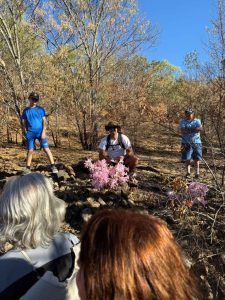
Pequeno momento de interpretação na Caminhada de Aniversário da Beir’Aja


